
Near Lincoln, Nebraska, you’ll find porta potties get emptied by certified waste management companies using specialized vacuum trucks that transport waste directly to municipal wastewater treatment plants and EPA-approved septic receiving stations throughout Lancaster County. These technicians follow strict EPA-mandated protocols during extraction, ensuring compliance with Lincoln-Lancaster County Health Department regulations. The waste undergoes primary screening, biological treatment, and disinfection at licensed facilities. Understanding these thorough disposal processes reveals significant details about safety standards and environmental protection measures.
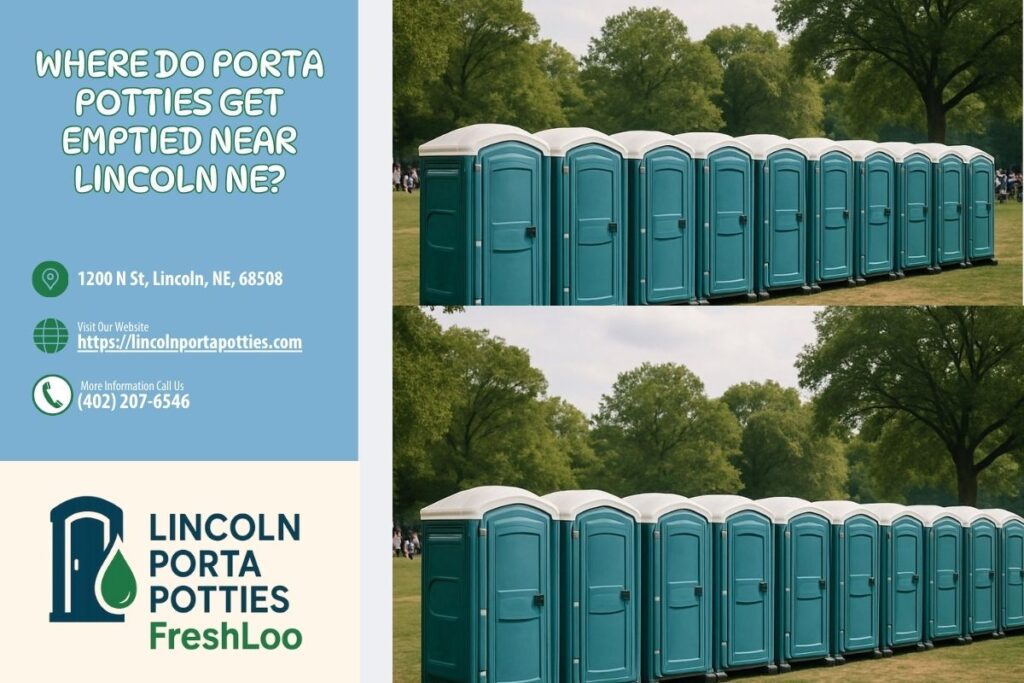
When portable restrooms require servicing, Lincoln Porta Potties FreshLoo dispatches specialized vacuum trucks equipped with high-capacity pumps and sealed storage tanks.
You’ll observe our technicians following EPA-mandated protocols during waste extraction. They connect industrial-grade hoses to the unit’s holding tank, creating negative pressure that draws liquid and solid waste into the truck’s sealed compartment.
Our operators wear protective equipment and sanitize all contact surfaces post-extraction. The vacuum system prevents spillage while maintaining odor containment throughout the process.
Fresh water and biodegradable chemicals are added to replenish the tank’s blue solution, which controls bacteria and neutralizes odors.
Each unit undergoes thorough cleaning, restocking of supplies, and quality inspection before redeployment.
This systematic approach guarantees compliance with local health regulations.
See also: portable toilet rental near Lincoln
Since proper waste extraction requires specialized machinery, Lincoln Porta Potties FreshLoo operates a fleet of vacuum trucks engineered specifically for portable restroom servicing.
These trucks feature high-capacity pumping systems that create powerful suction to extract waste and chemicals from holding tanks. You’ll notice each truck carries fresh water tanks for rinsing units and chemical storage compartments for sanitizing solutions.
The vacuum pumps generate sufficient pressure to completely empty tanks while preventing spillage or contamination. Sealed waste compartments guarantee EPA compliance during transport to approved disposal facilities.
Each truck includes specialized hoses designed for porta potty access ports, preventing cross-contamination between units. GPS tracking systems monitor routes and service schedules, guaranteeing regulatory documentation requirements are met throughout the waste removal process.
Maintaining rigorous safety protocols during porta potty servicing protects both technicians and customers from hazardous waste exposure.
You’ll find certified technicians wearing full personal protective equipment, including chemical-resistant gloves, protective eyewear, and specialized coveralls during waste removal operations.
Professional service teams follow EPA-mandated procedures for proper waste containment and transportation.
They’ll sanitize all surfaces using EPA-approved disinfectants that eliminate harmful bacteria, viruses, and odor-causing organisms.
Each unit undergoes thorough cleaning with high-pressure washing systems and antimicrobial treatments.
You can expect technicians to properly dispose of waste at licensed treatment facilities, maintaining detailed documentation for regulatory compliance.
They’ll also inspect equipment for damage or contamination risks, ensuring your rental meets health department standards before returning to service.
After proper collection and containment, waste from porta potties follows a strictly regulated disposal pathway to wastewater treatment facilities.
You’ll find that licensed haulers transport collected waste directly to municipal treatment plants or approved septic receiving stations. These facilities process the waste through primary screening, biological treatment, and disinfection stages that meet EPA standards.
The treatment process removes solid matter, breaks down organic compounds, and eliminates harmful pathogens before releasing treated water back into the environment.
You can trust that strict documentation requirements track waste from collection through final disposal, ensuring regulatory compliance at every step.
This controlled system protects public health and environmental safety while maintaining the sanitary standards you expect from professional porta potty services.
When Lincoln Porta Potties FreshLoo’s licensed haulers collect waste from your rental units, they transport it directly to Lincoln’s wastewater treatment facilities using DOT-compliant vacuum trucks.
These specialized vehicles maintain sealed systems that prevent spills and contamination during transit. Our haulers follow predetermined routes to minimize transport time and environmental impact.
Upon arrival at treatment plants, technicians discharge waste through designated receiving stations equipped with proper containment systems.
Each load is documented with manifests that track volume, origin, and disposal location for regulatory compliance.
The facilities process this waste through the same treatment stages as municipal sewage: primary settling, biological treatment, and final clarification.
This systematic approach guarantees your porta potty waste integrates seamlessly into Lincoln’s established wastewater infrastructure while meeting all EPA and state environmental standards.
Beyond standard wastewater treatment plants, Lincoln Porta Potties FreshLoo partners with specialized disposal facilities that handle unique waste streams and emergency situations.
These facilities process hazardous waste, industrial chemicals, and contaminated materials that can’t enter conventional treatment systems.
You’ll find these specialized centers equipped with advanced filtration systems, chemical neutralization capabilities, and containment protocols exceeding EPA standards.
They’re licensed for specific waste categories, including medical waste from portable units at healthcare events or construction sites with chemical contamination.
During natural disasters or public health emergencies, these facilities provide critical backup capacity when primary treatment plants reach maximum load.
Each facility maintains detailed manifest tracking, ensuring complete regulatory compliance throughout the disposal chain.
This partnership ensures proper waste management, regardless of the content’s complexity or volume.
Proper servicing intervals for portable sanitation units depend on usage rates, environmental conditions, and regulatory requirements specific to your event or worksite. You’ll need to establish schedules that maintain sanitary conditions while complying with local health codes.
| Usage Level | User Count | Service Frequency |
|---|---|---|
| Light | 1-10 users | Weekly |
| Moderate | 11-25 users | Bi-weekly |
| Heavy | 26-50 users | 2-3 times weekly |
| High-Volume | 50+ users | Daily |
| Event-Based | Variable | Pre/post event |
You must monitor tank capacity levels, which shouldn’t exceed 75% between services. Temperature fluctuations impact waste breakdown rates, necessitating adjusted schedules during extreme weather conditions. Your service provider should document pumping frequencies, waste volumes, and maintenance performed to guarantee regulatory compliance and peak unit performance throughout your rental period.
Event porta potty servicing requires customized schedules that align with your gathering’s duration, attendance patterns, and specific activities.
Single-day events typically require pre-event delivery and post-event removal, with no mid-event servicing. Multi-day festivals require daily pumping and restocking to maintain sanitary conditions and prevent overflows.
You’ll need morning service schedules for overnight events, ensuring units are clean before peak usage hours. High-traffic events with alcohol service demand more frequent attention—sometimes twice daily.
Construction sites follow weekly schedules, while special events might require emergency service capabilities.
Peak attendance periods determine service intensity. Weekend weddings need different scheduling than weeklong conferences.
Lincoln’s municipal regulations require waste removal within specific timeframes, making schedule compliance crucial. Your service provider coordinates pump truck routes to minimize disruption while meeting health department standards and maintaining ideal facility conditions throughout your event.
Construction sites present distinctly different porta potty requirements compared to temporary events, demanding consistent long-term service plans that accommodate fluctuating workforce sizes and extended project timelines.
You’ll need weekly pumping schedules with flexible adjustment capabilities as your crew size changes throughout the project phases.
OSHA mandates one toilet facility per twenty workers, requiring precise monitoring of your workforce headcount. You must coordinate service timing with active work hours to minimize operational disruption while maintaining regulatory compliance.
Construction environments generate higher waste volumes due to extended daily usage patterns. Your service provider should implement robust pumping protocols, typically requiring twice-weekly service for high-traffic units.
Furthermore, you’ll need regular restocking of hand sanitizer, toilet paper, and cleaning supplies to maintain sanitary conditions throughout your project’s duration.
While porta potties provide essential sanitation services, you must address specific environmental and health protocols to guarantee safe waste management and regulatory compliance.
You’ll need proper containment systems that prevent groundwater contamination through leak-proof tanks and sealed connections. Your waste disposal process requires adherence to EPA regulations governing sewage treatment facility standards and transport requirements.
You must implement sanitization protocols using EPA-approved disinfectants that eliminate pathogens while maintaining environmental safety.
Temperature control during transport prevents bacterial proliferation and odor issues. Your service provider should maintain proper licensing for waste hauling and disposal, ensuring compliance with local health department regulations.
Documentation requirements include waste manifest tracking, disposal certificates, and regular tank inspections.
You’ll also need emergency response procedures for spills or containment failures to protect public health and environmental resources.
Understanding Lincoln’s municipal waste management ordinances guarantees your porta potty rental complies with all local requirements beyond federal EPA standards.
You must verify that waste haulers possess valid Lincoln-Lancaster County Health Department permits for sewage transport and disposal. Local regulations mandate specific pump-out frequencies, typically every 72 hours for high-usage events, ensuring compliance with city sanitation codes.
You’re required to maintain disposal documentation showing waste reaches approved treatment facilities within Lincoln’s jurisdiction.
Municipal ordinances specify placement restrictions near water sources, requiring 100-foot setbacks from wells and streams. Your rental provider must coordinate with Lincoln’s Public Works Department for street placement permits when units occupy public right-of-way areas.
Non-compliance results in citations, fines, and potential service suspension, making regulatory adherence crucial for the success of events.
Three primary eco-friendly disposal methods reduce your porta potty rental’s environmental impact while maintaining strict regulatory compliance.
Biological treatment processes break down organic waste using beneficial bacteria, converting sewage into harmless byproducts before discharge. Chemical precipitation removes phosphorus and nitrogen compounds that can damage aquatic ecosystems near Lincoln’s waterways.
Advanced filtration systems eliminate pathogens and contaminants through multi-stage processing, ensuring effluent meets EPA standards. You’ll benefit from membrane bioreactors that combine biological treatment with ultrafiltration, producing water clean enough for irrigation use.
Resource recovery programs extract methane gas from waste decomposition, generating renewable energy for treatment facilities. Solid waste undergoes composting protocols, creating nutrient-rich soil amendments.
These methods minimize landfill dependency while converting waste streams into valuable resources, supporting Lincoln’s sustainability initiatives.
You’ll pay $75-150 per service call for porta potty waste removal in Lincoln, depending on unit type and frequency. Commercial-grade pumping trucks handle regulated waste disposal following EPA guidelines for proper treatment facility processing.
You can’t legally empty porta potties yourself in Lincoln. Professional waste removal services like FreshLoo are required due to strict environmental regulations, proper disposal licensing, and specialized equipment needed for safe sewage handling.
If your porta potty overflows before scheduled service, you’ll need emergency pumping immediately. Contact Lincoln Porta Potties FreshLoo for urgent response. Don’t attempt cleanup yourself—it’s unsanitary and violates health regulations requiring professional waste handling.
Yes, we’ll service your porta potties throughout Nebraska’s winter months. Our technicians use specialized cold-weather equipment and antifreeze solutions to prevent freezing, ensuring compliant waste removal and sanitation even in sub-zero temperatures.
You should schedule porta potty rentals at least one week ahead for standard events. For peak seasons, holidays, or large gatherings, book two to three weeks early to guarantee availability and proper service scheduling.




© 2026 Lincoln Porta Potties FreshLoo. All Rights Reserved.